Begin with a line that lingers, even before every word is understood.
ABOUT EIWA
One poem.
One place.
Two songs.
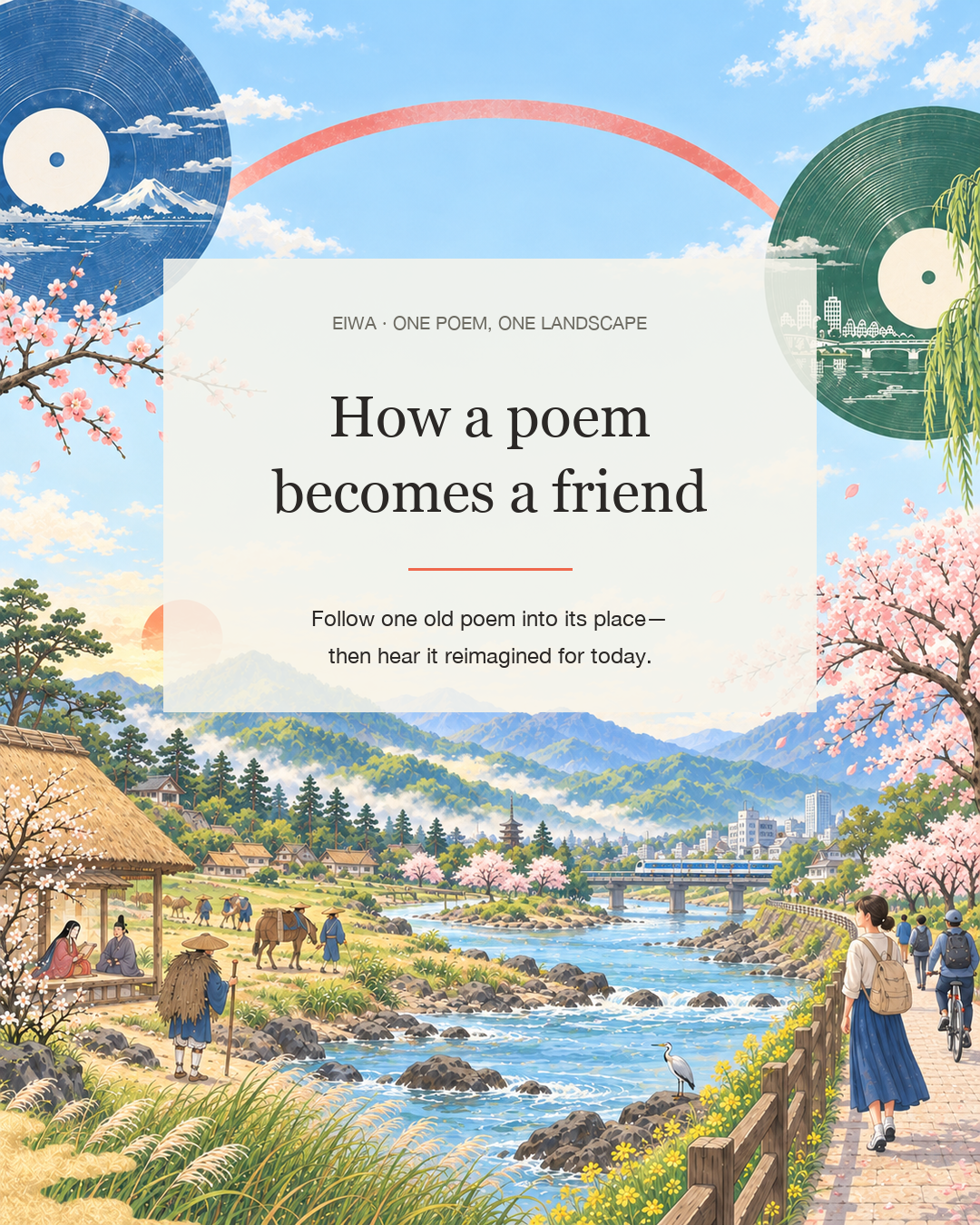
EIWA is a way of meeting old Japanese poems through the places, seasons, and human lives inside them.
01
Why two songs?
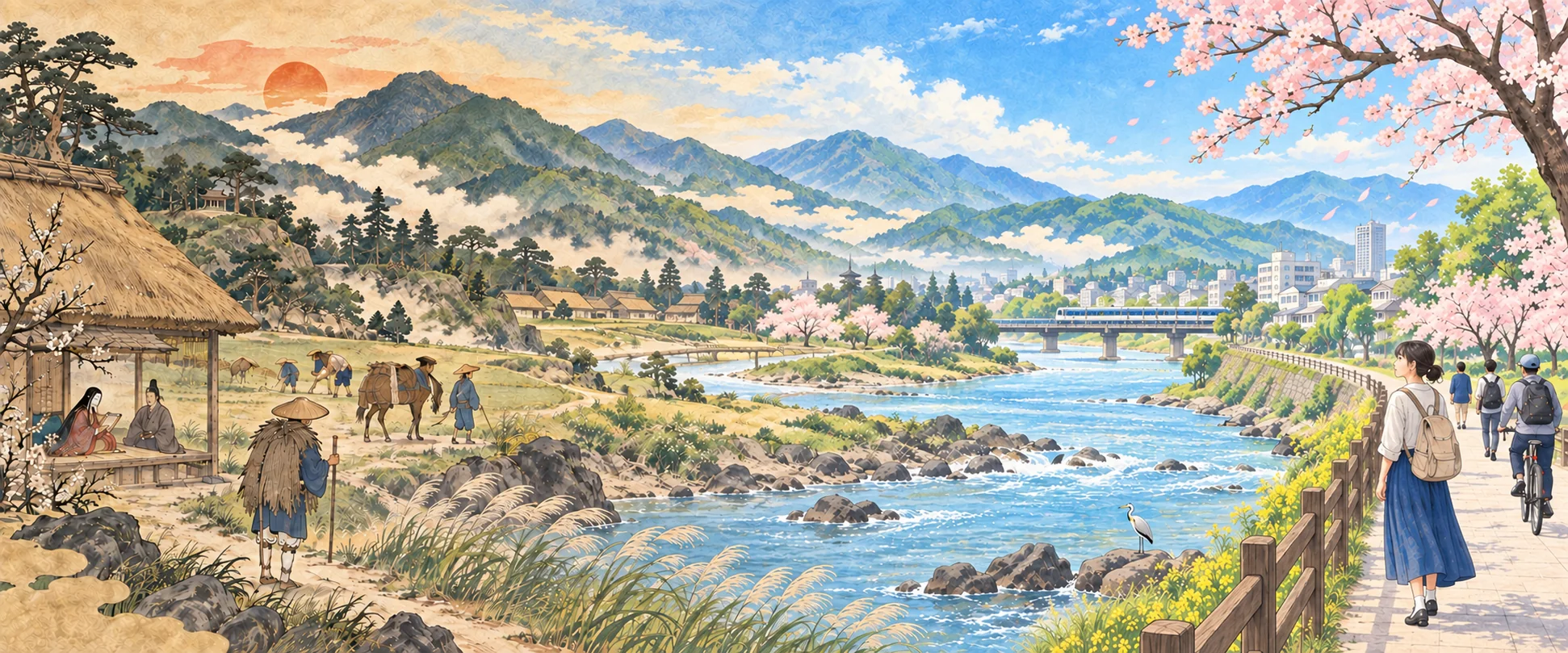
Side A: Motouta (本歌) listens closely to the original poem. We research its words, season, landscape, and historical setting, then turn that world into a song and an image.
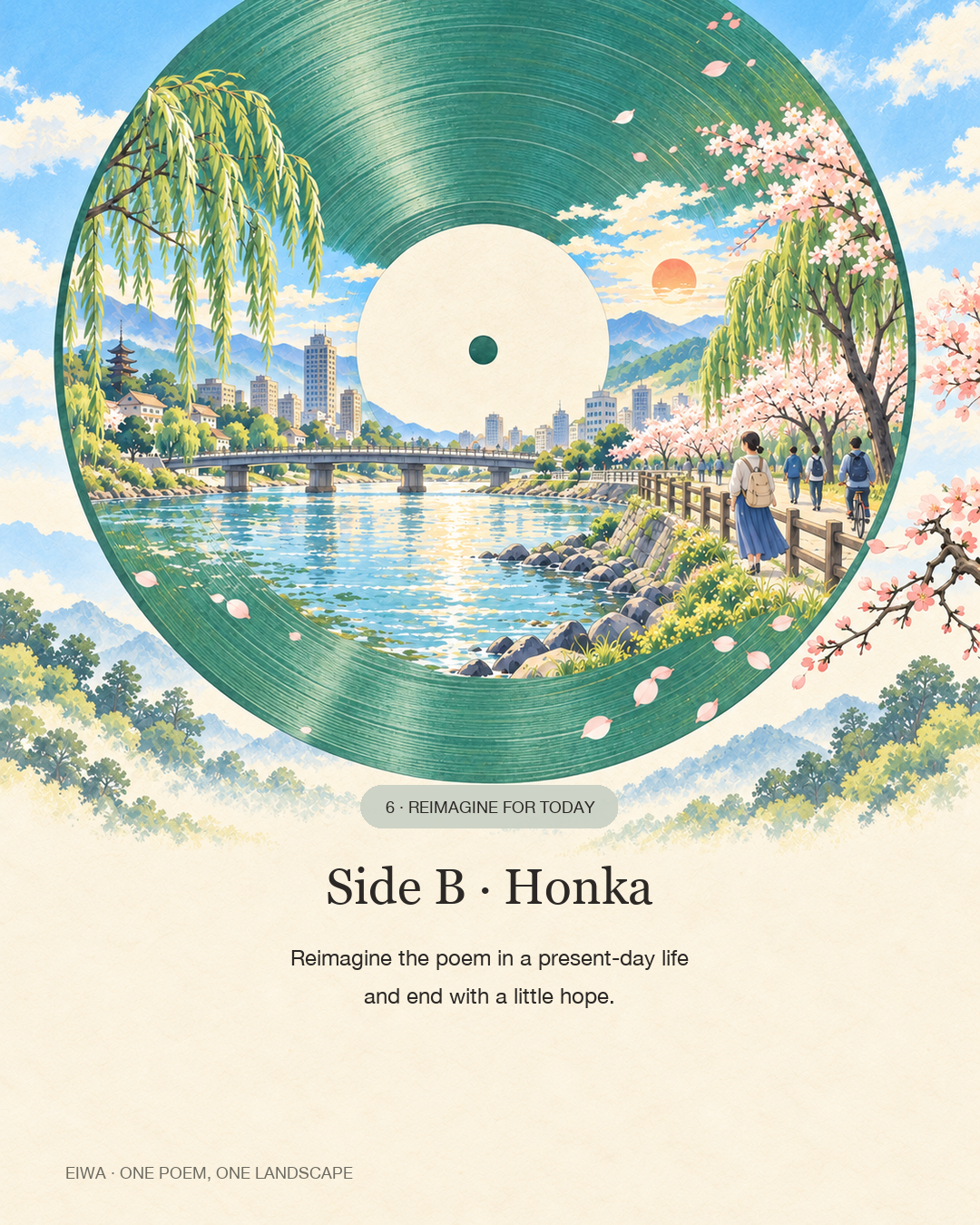
Side B: Honka (翻歌) reimagines the poem in the same place today. It keeps the emotional core of the poem, but places it inside a present-day life. Honka always ends with a little hope. “Honka” is EIWA’s own term for this act of reimagining.
Find the place, season, history, and human activity around it.
Let the original world be heard.
Ask what a person in another time can still make us feel.
Look for a present-day life in the same place.
Sing back from the present.
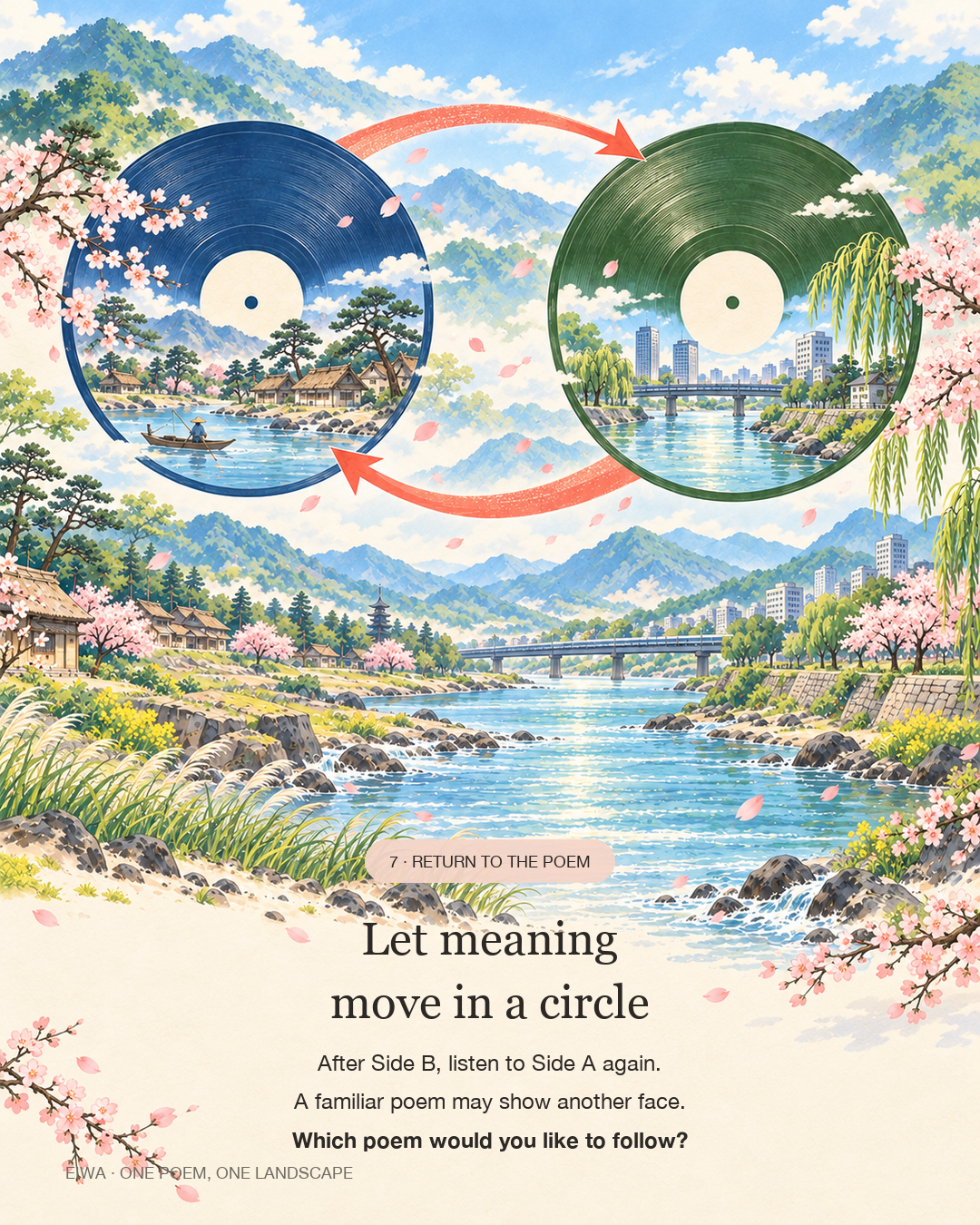
Then return to Side A. The poem may look a little different.
THE IDEA IN EIGHT FRAMES
How EIWA moves
from poem to Honka
Use the arrows, swipe, or press the left and right arrow keys.
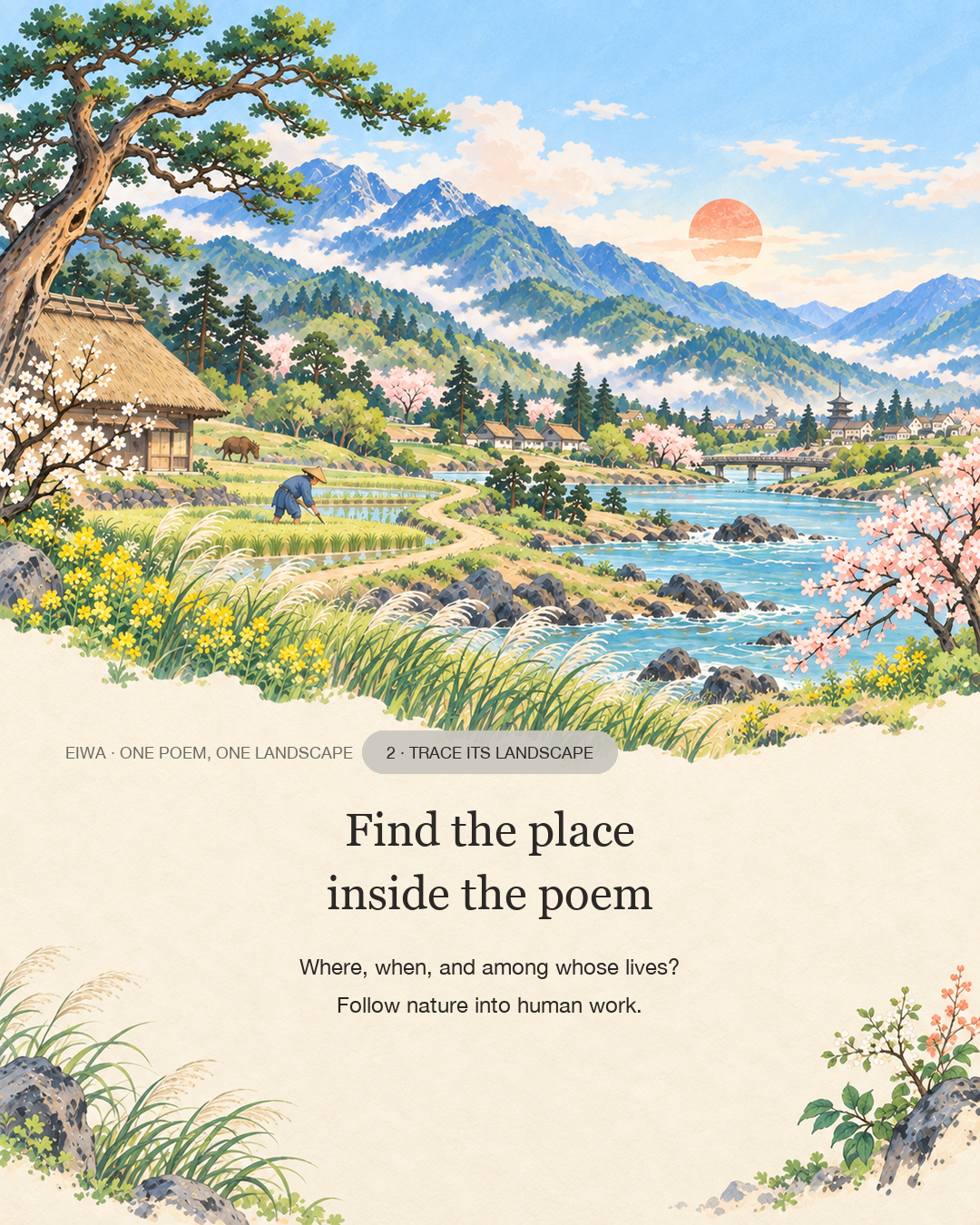
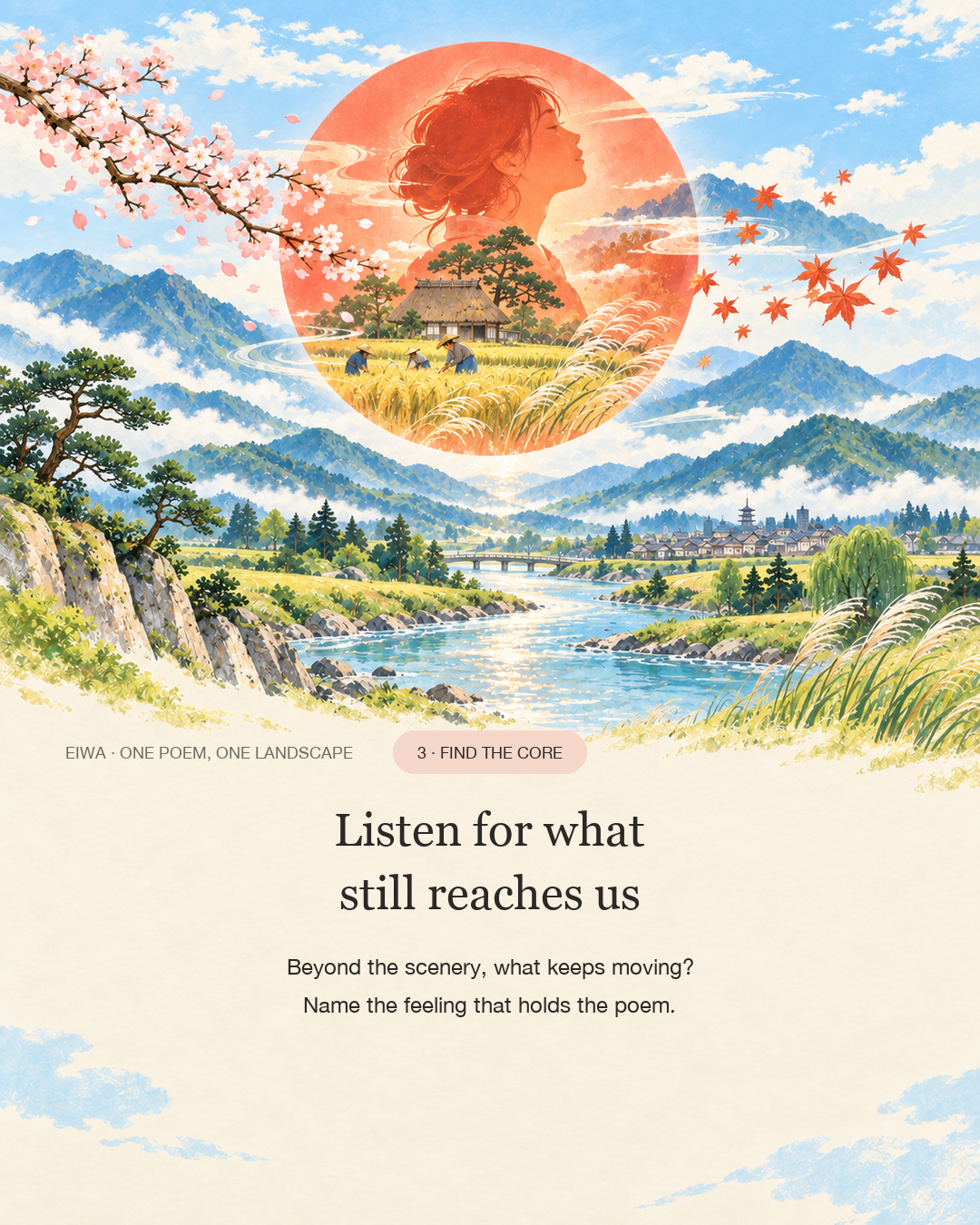
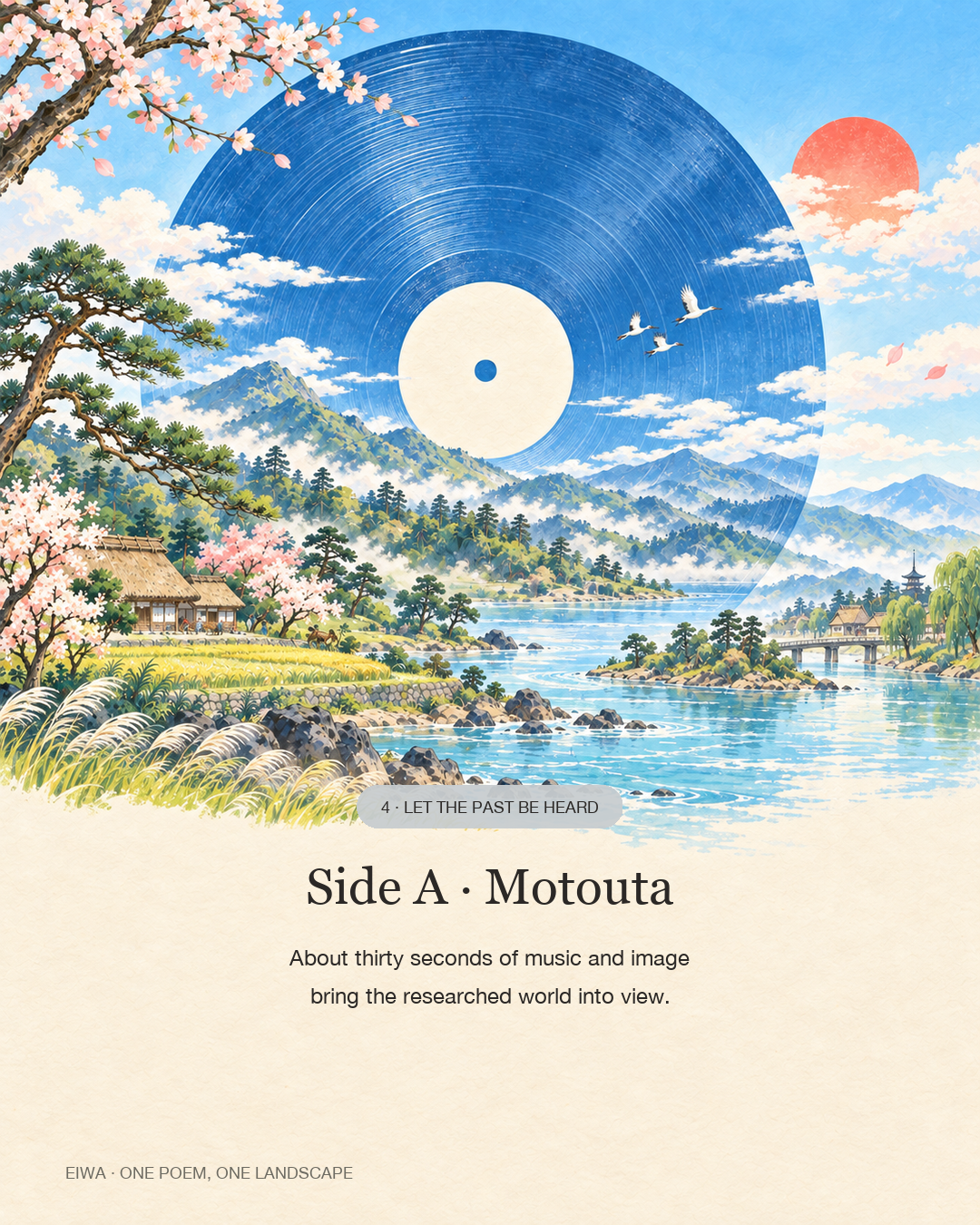
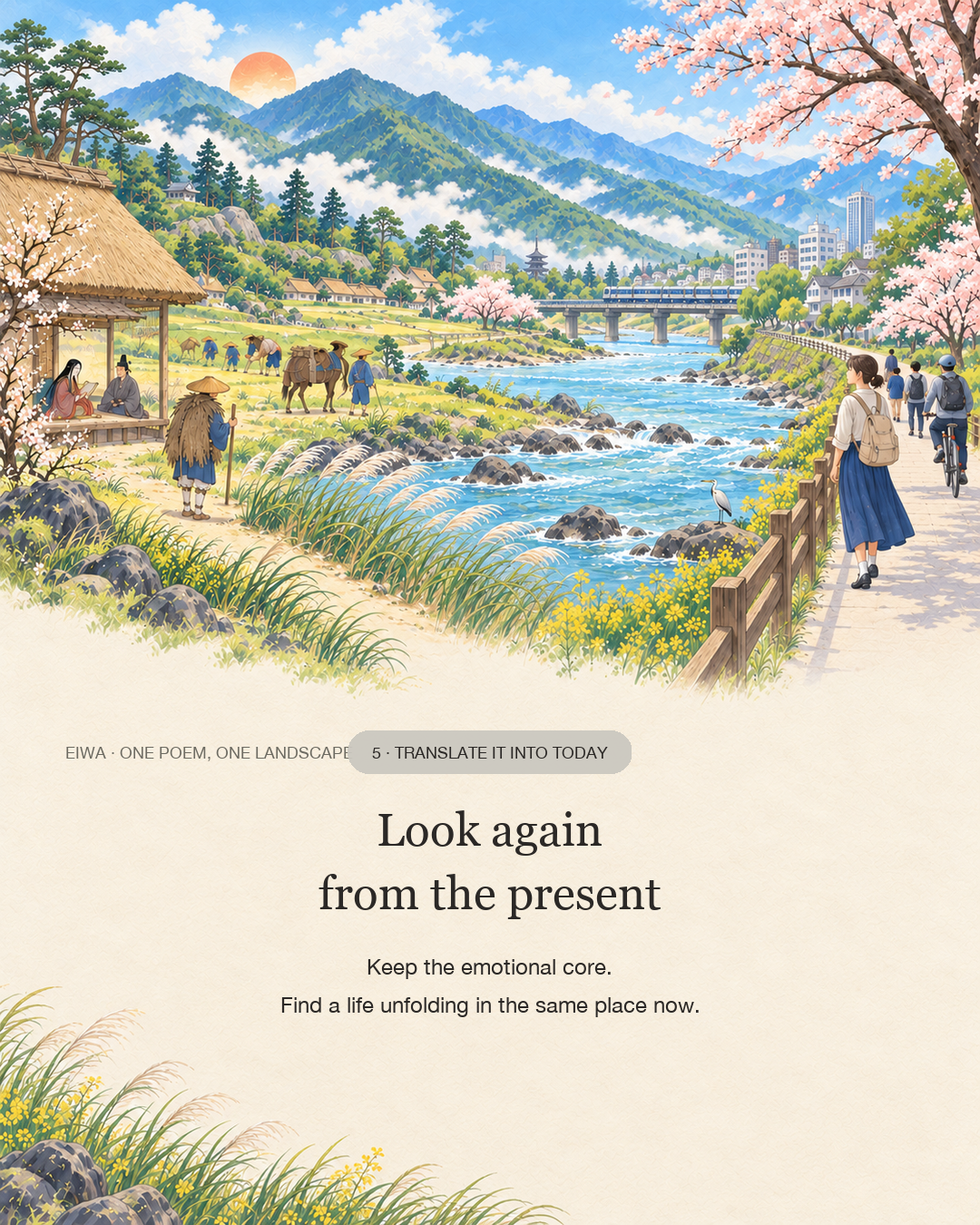
02
What does “EIWA” mean?
The sound came first. The meanings gathered around it later:
- 詠
- ei · to compose or reciteWe read the poem aloud and make it sing again.
- 映
- ei · to reflect or projectWe bring the landscape back into view.
- 和
- wa · Japanese poetry; harmonyWe listen for culture formed within nature.
- 輪
- wa · circleMeaning moves between past, present, maker, and listener.
03
A working hypothesis, not the final word
A poem rarely gives us an exact address or a complete biography. We show what is documented, what is widely accepted, and what we have imagined. Each work is published as a version. If a scholar, a resident, or a listener helps us see something differently, that becomes material for the next version.
Corrections are not a loss.
They keep the circle moving.
04
Made through learning
I am Yusuke Shinozaki, also known as Shinojackie. Classical Japanese and Chinese were difficult subjects for me at school. Music, technology, and making things were not. EIWA brings the difficult field into the fields I love.
Music is made with Suno. Images are made with OpenAI Codex. Editing and production use Claude Code and Codex. Research, interpretation, selection, and the final editorial decisions remain human work—and open to revision.
START WITH POEM 01
A wet sleeve in an autumn rice field.
Follow it across more than a thousand years, from a temporary shelter to students harvesting rice in Shiga.
Read and listen →