
 EIWA–001
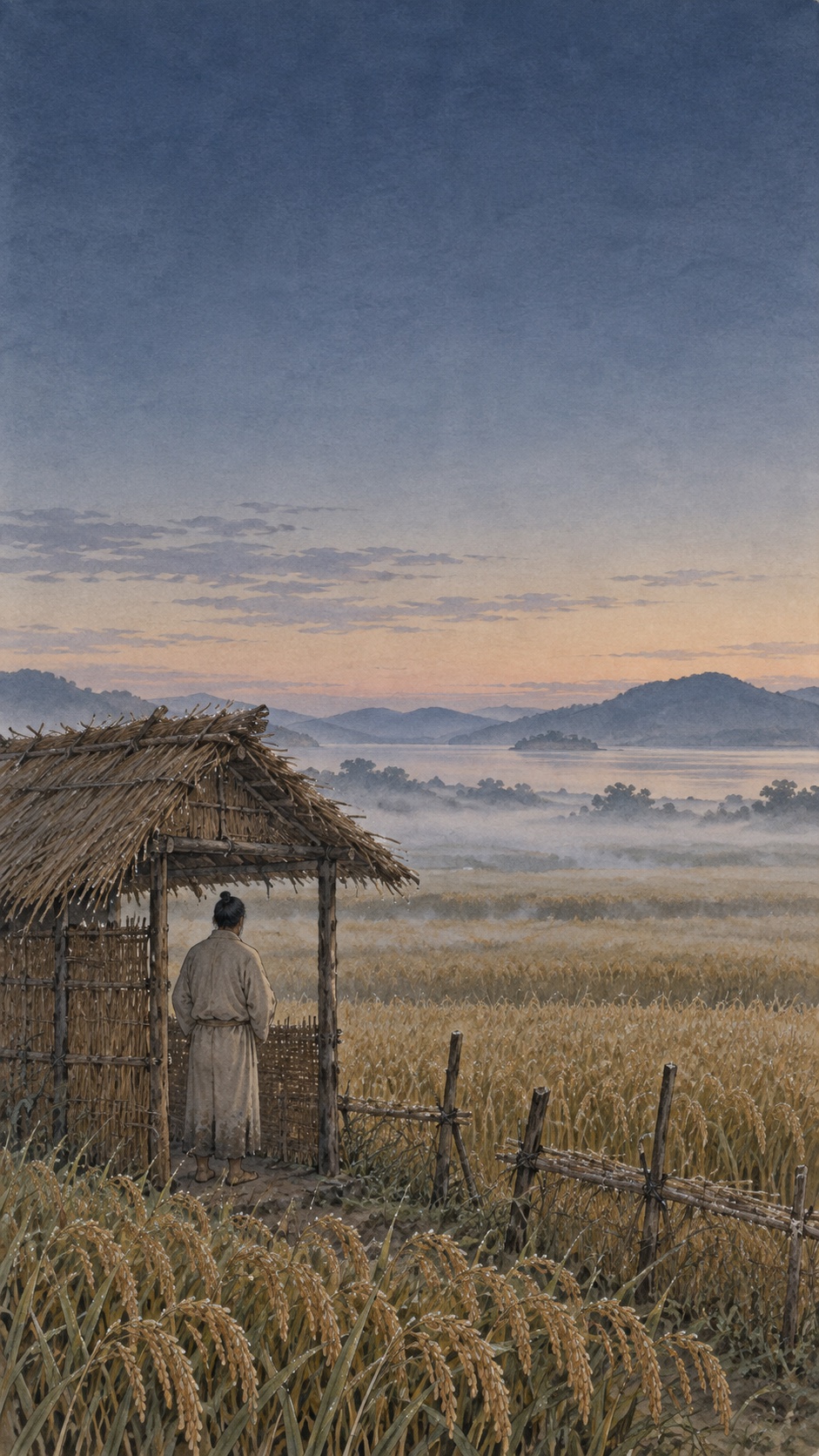
Our imagined scene · Ōmi, early autumn
Hyakunin Isshu · Poem 1
The Sleeves
That Stayed Wet
秋の田の
Before rice reaches a bowl,
someone has to live with the weather.
More than a thousand years ago, someone spent an autumn night beside a rice field. Dew came through the rough roof. Their sleeves stayed wet.
Japanese vocal · koto, piano and bamboo flute
WATCH · SIDE A
Hear the old scene before reading on.
Japanese vocal, with the same readable English translation used in this article.
ORIGINAL JAPANESE
秋の田の
かりほの庵の
苫をあらみ
わが衣手は
露にぬれつつ
Traditionally attributed to Emperor Tenji
READABLE TRANSLATION
In the autumn rice fields, the rough roof of my shelter lets the night dew through. As I wait beside the harvest, my sleeves stay wet.
Closer translation
Because the woven cover of my temporary hut in the autumn fields is loosely made, my sleeves keep getting wet with dew.
“As I wait beside the harvest” makes the likely scene visible; it is not stated directly in the Japanese.
No grand event.
Only a body in the cold.
Rice is ready to be harvested. Someone is staying in a temporary hut beside the fields. Its roof is covered with toma—mats woven from reeds, sedge, or similar plants.
The weave is rough, so it does not fully keep out the night dew. The poem holds us beside one person while their sleeves slowly grow wet.
That small physical detail has survived for more than a thousand years.
- 秋の田
- aki no ta
rice fields in autumn - かりほ
- kariho
a temporary field hut - 苫
- toma
a woven plant-fiber cover - 衣手
- koromode
a poetic word for sleeve
THE VOICE BEHIND THE NAME
Was this really written by an emperor?
The Hyakunin Isshu presents the poem as a work by Emperor Tenji. Most scholars, however, understand it as a later version of an anonymous harvest poem in the Man’yōshū, Japan’s oldest surviving collection of poetry.
We do not know exactly when or why the field worker’s voice became the emperor’s poem. Behind the famous name, we can still hear the physical experience of someone who worked beside the rice.
Not simply “became wet.” It suggests something continuing: getting wet, remaining wet, wet again and again. The person is still there.
FLIP THE RECORD · SIDE B
When a memorized poem
becomes real
Three students stay with a farming family in Higashiomi. At dawn, they help with the rice harvest. Dew wets their gloves and sleeves. Then one of them realizes: this is the poem they learned at school.
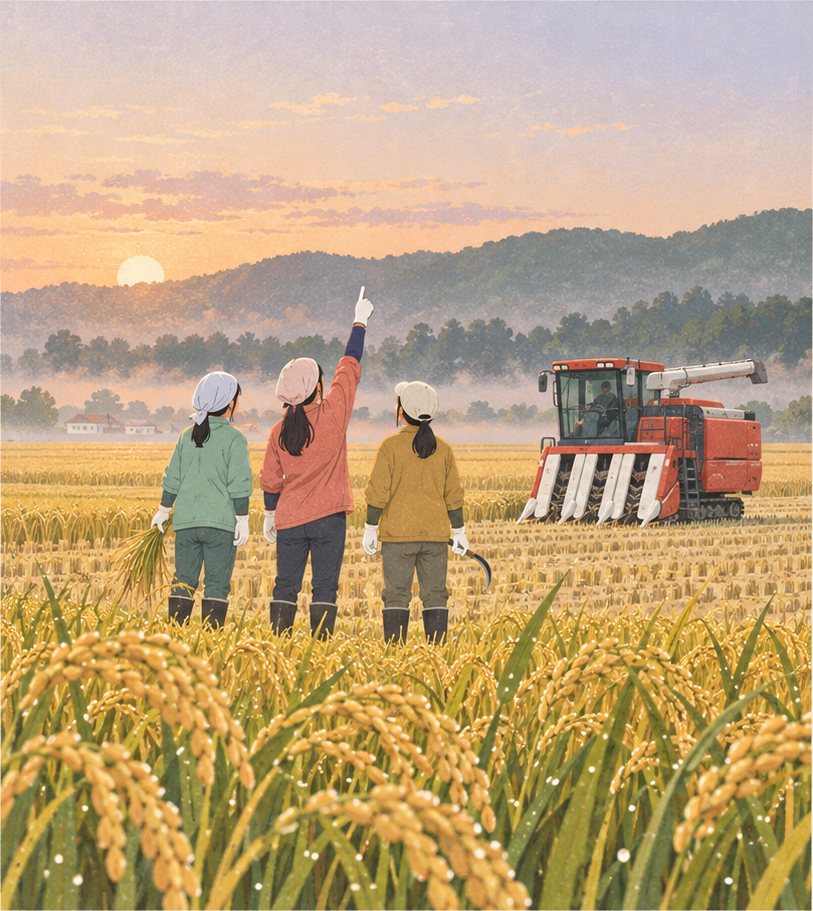
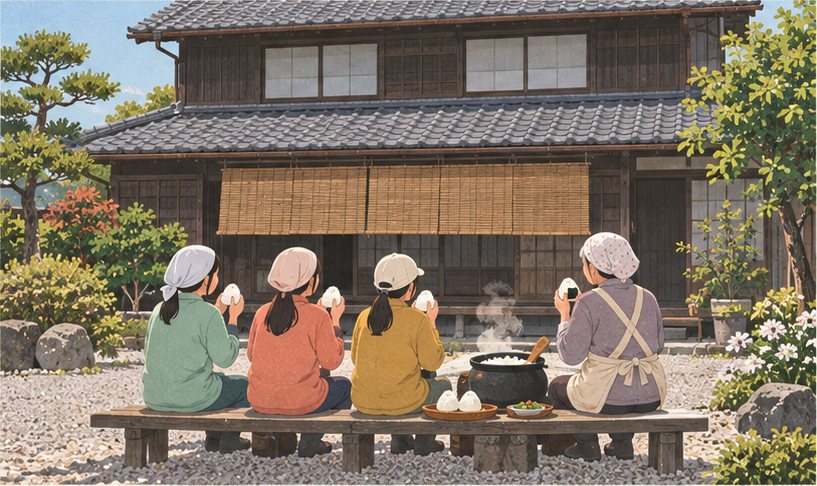
はぁ〜ぁ 新米 頬張り 感謝!
Hā—fresh rice. One bite, and gratitude.
The poem does not tell us to be grateful.
It does not praise farming or explain where food comes from. It only lets us stay beside one person whose sleeves are wet.
But when we share that bodily experience across more than a thousand years, the rice in front of us begins to look different.
It lets us see what gratitude might grow from.
Behind every bowl of rice are human hands and forces of nature that no person can fully control. The tools have changed. That relationship continues.
OUR WORKING HYPOTHESIS · V1
Ōmi, present-day
Shiga Prefecture
The poem does not name a place. We place Side A around the former Ōmi capital because the poem was attributed to Emperor Tenji, whose capital stood in present-day Ōtsu.
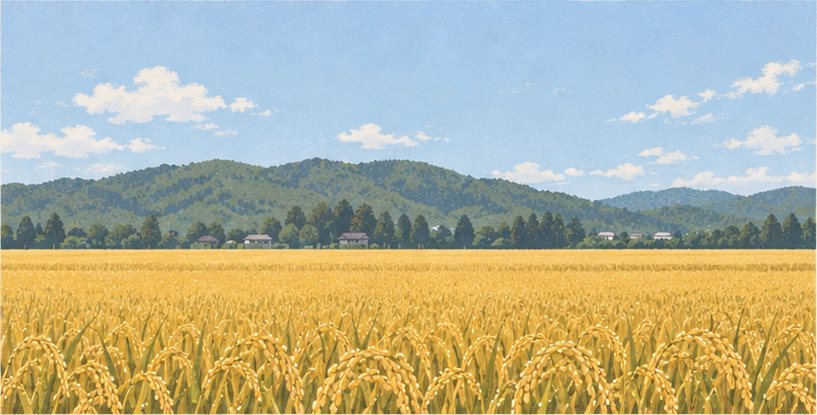
For Side B, we move east across Lake Biwa to the rice fields of Higashiomi, where educational farm stays bring students into farming households.
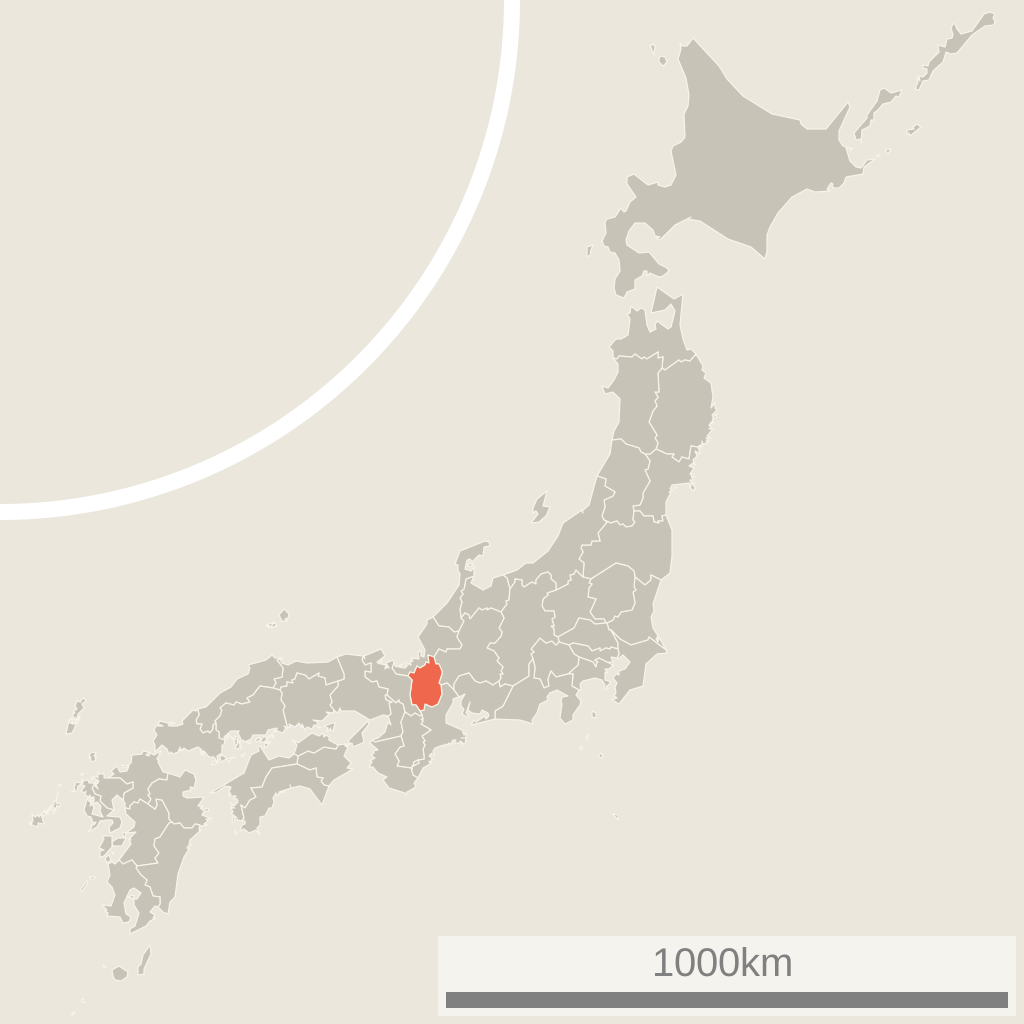
ORIGINAL SETTINGRice fields around the former Ōmi capital
SEASONEarly autumn, around the rice harvest
MODERN REPLYA student farm stay in Higashiomi
This is a creative setting, not a claim that the poem was written in one exact field.TELL A FRIEND · 30 SECONDS
“Aki no ta no” opens the Hyakunin Isshu, Japan’s famous collection of one hundred classical poems. It describes someone staying beside an autumn rice field while dew comes through the rough roof and wets their sleeves. Our present-day reimagining follows students who feel the same dew—and begin to see the rice on their table differently.
What food in your country carries a story of land, weather, and human work?